The question
Pituitary pars intermedia dysfunction, or PPID, is an age-associated neuroendocrine disorder in horses. It is known to alter endocrine function and is associated with chronic systemic inflammation, but its effects within the reproductive tract have been less clear. Our team asked whether inflammatory changes associated with PPID extend into the uterus and the preovulatory follicle.
My role and the approach
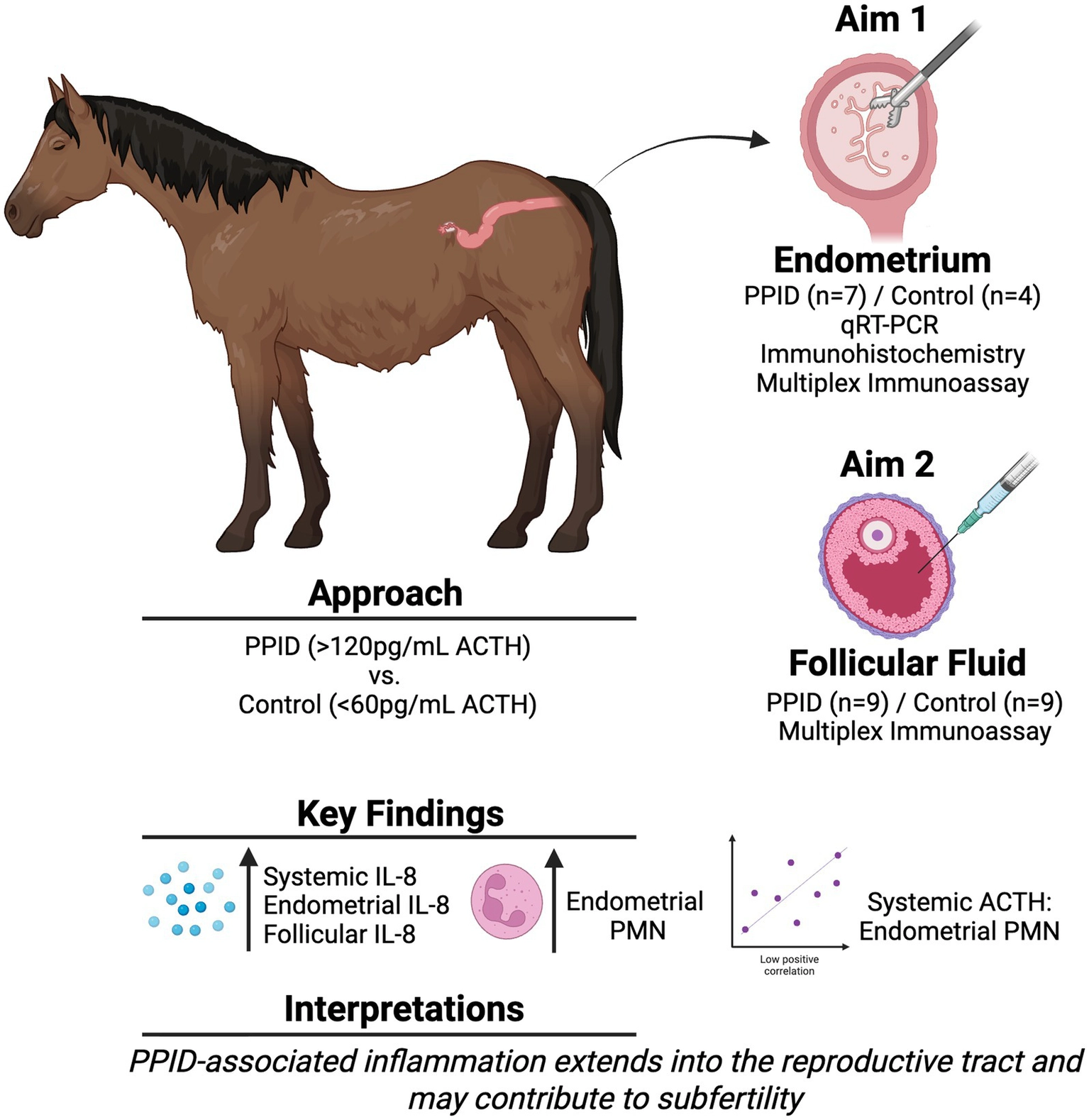
As an undergraduate researcher in the Fedorka Lab, I contributed to sample collection, tissue management, RNA isolation, and the laboratory workflow used to evaluate endometrial inflammatory signaling. The broader study compared mares diagnosed with PPID to age-matched controls using endometrial biopsies, follicular fluid, quantitative PCR, immunohistochemistry, and cytokine immunoassays.
What we found
The study found evidence that PPID-associated inflammation extends into the reproductive tract. Mares with PPID showed increased endometrial expression of the inflammatory chemokine CXCL8/IL-8, greater endometrial leukocyte presence, and increased CXCL8 concentrations in follicular fluid. Several inflammatory measurements were also associated with circulating ACTH concentrations.
Why it matters
Normal reproductive function depends on carefully regulated inflammatory signaling. Persistent inflammation within the uterus or follicle may affect fertility, tissue health, and the ability to support conception. These findings help establish a biological link between an endocrine disease of aging and reproductive tract inflammation, while opening new questions about clinical consequences and management.
What this project taught me
This work strengthened my interest in reproductive immunology and in research that connects molecular mechanisms with whole-animal outcomes. It also gave me experience carrying biological samples through the research pipeline—from collection and preservation to RNA isolation, analysis, interpretation, and scientific communication.